8th Grade English Language Arts (Period 6th) Assignments
- Instructors
- Term
- 2018-19 School Year
- Department
- English/Language Arts
- Description
-
This year we will focus on three units in our classroom that examine narrative, informational, and argumentative texts. The fourth unit will teach students to properly integrate and identify different modes of writing through collaborative class work and research.
Files
Upcoming Assignments

No upcoming assignments.
Past Assignments
Due:
Assignment
Document and shared it with me. Students were given the following writing assignment:
Choose from the following writing prompts and type as much as you can before
class ends:
1. Free write option- write about anything you want (your favorite hobby,
television show, memory, type of music, etc.)
2. Free write option #2- write a poem, song, or original piece. This does not have
to be structured in a certain way and you have the freedom to be as creative as
possible.
3. Tell me about your favorite middle school memory. What happened? When
did it happen?
4. Write about your favorite hobby or game. Use descriptive language to
describe this hobby or game. Assume that I know nothing about this hobby or
game.
5. Write about your favorite book. What was the name of the book and the
author’s name (if you remember)? Why is this your favorite piece of writing?
Due:
Assignment
argumentative essay for editing.
Due:
Assignment
argumentative essay for editing.
classroom. They responded to the following questions about their peer’s essay:
Checklist: Yes or No?
12 point font, Times New Roman ______
Double-spaced ______
Peer name, my name, and class name in top left margin ______
Title, centered, underlined ________
Introduction _______
(3) Body Paragraphs ______
Conclusion _______
5-7 Sentences per paragraph _______
Three total quotes with in-text citations ______
Separate Works Cited Page _______
What is the thesis statement of this essay?
Does your peer support having phones in school or not?
What are the three main claims made in this paper? Does one appear as the
topic of each body paragraph?
List five corrections that you suggested for their paper:
List five strong aspects of this paper:
How does this paper differ from yours?
How is this paper similar to yours?
Did you experience any positive outcomes from peer editing? Why or why not?
(5-7 sentences)
Due:
Assignment
Newsela forum. Students were to complete two Newsela assignments. The first article
assignment aimed to scaffold reading for information and the second article
assignment aimed to scaffold vocabulary acquisition. Students can earn up to (8) total points for their Newsela assignments. Each article assignment is worth (4) points.
Due:
Assignment
Due:
Assignment
essay in their Google Docs. Students will work on revising the rough drafts of their argumentative essays. Students will be assessed formatively as they work to revise their rough drafts.
Students had the opportunity to earn up to 40 points for this draft and will have
the chance to earn up to 10 points for peer editing activity next week. This
serves as their mid-assessment.
Due:
Assignment
essay in their Google Docs. Students will work on revising the rough drafts of their argumentative essays. Students will be assessed formatively as they work to revise their rough drafts.
Students had the opportunity to earn up to 40 points for this draft and will have
the chance to earn up to 10 points for peer editing activity next week. This
serves as their mid-assessment.
Due:
Assignment
previous day. Students will continue to work on the textual evidence activity.
Due:
Assignment
to 8 points for their evidence charts.
Due:
Assignment
Students were asked to read the article. Students completed a vocabulary activity in relation to the article. Students were then asked to complete the following activity:
On your own sheet of paper, create your own table using an article from your
argumentative writing essay source packet. You will have to choose 8 words and
define them using a dictionary, in your own words, and then give me an
example of how the word relates to you. Attach your own chart to the
vocabulary sheet and turn in to the basket.
Due:
Assignment
Due:
Assignment
“If you could choose any career in the world, what would it be? What are your
three main reasons for wanting to go into this career field? Write using
descriptive language and go into as much detail as possible.”
Writing Essay:
Outline:
P1: Introduction
P2: Explain Reason #1
P3: Explain Reason #2
P4: Explain Reason #3
P5: Conclusion
Due:
Assignment
collaborative classroom review. Students will review and revise their responses to the questions posed about both article readings given this week. Students may earn up to 5 points per article question response assignment that they complete.
Due:
Assignment
McWhorter.
the English Language?” By John McWhorter.
Due:
Assignment
Bully-Related Tweets Sent Daily (STUDY)” by Britney Fitzgerald.
Twitter: Researchers Find 15,000 Bully-Related Tweets Sent Daily (STUDY)” by
Britney Fitzgerald.
Due:
Assignment
essay self-evaluation.
Due:
Assignment
Due:
Assignment
Due:
Assignment
Due:
Assignment
Due:
Assignment
Newsela website to reinforce skills needed for STAR Testing.
Due:
Assignment
main body paragraphs. The students were asked to include their thesis
statements with their three main claims to support their argument. The
students were also asked to use their Source Packets to cite information to
support their argument.
Due:
Assignment
main body paragraphs. The students were asked to include their thesis
statements with their three main claims to support their argument. The
students were also asked to use their Source Packets to cite information to
support their argument.
Due:
Assignment
Due:
Assignment
Due:
Assignment
Students signed out a Chromebook laptop and created a new Google Doc to begin typing their rough drafts for their argumentative essay.
Students worked on typing their rough drafts for their argumentative essay while receiving live feedback from the teacher.
Students could earn up to 40 points for their rough draft of their essay.
Due:
Assignment
Students signed out a Chromebook laptop and created a new Google Doc to begin typing their rough drafts for their argumentative essay. They shared this document with the teacher.
Students worked on typing their rough drafts for their argumentative essay while receiving live feedback from the teacher.
Students could earn up to 40 points for their rough draft of their essay.
Due:
Assignment
Students started working on developing their “Developing a Meaningful Counterclaim” page in their argumentative essay packet.
Students completed the “Developing a Meaningful Counterclaim” page in their argumentative essay packet.
Students could earn up to 5 points for their completed “Developing a Meaningful Counterclaim” page in their packet.
Due:
Assignment
Due:
Assignment
Due:
Assignment
Students were to complete and submit (3) MLA citations for articles that they will use for their argumentative essays.
Students were asked to complete page 4 in their essay packet that required them to follow a process of developing a meaningful counterclaim for their essay.
Students could earn up to 5 points for successfully completing their counterclaim page in their essay packet.
Due:
Assignment
Students were asked to submit their completed thesis statements.
The students and teacher used MLA citation guidelines to begin citing their essay sources.
The teachers and students will review and revise their MLA citations the following week.
Due:
Assignment
Students were asked to finish up and submit the “Thesis Statement” handout from the previous day and submit it for grading.
Students were asked to use page 3 in their essay packet to begin creating their thesis statement for their argumentative essay.
Students could earn up to 5 points for successfully completing page 3 in their essay packet.
Due:
Assignment
Students submitted their evidence organizer for a grade.
Students were given a “Thesis Statement” handout that explained the definition of a thesis along with a formula format for them to use to create a proper thesis statement (state the topic + state your opinion or claim about the topic= thesis statement). Students were asked to complete this short assignment.
Students could earn up to 5 points for their “Thesis Statement” handout.
Due:
Assignment
Students could earn up to 5 points for their brainstorming assignment and up to 10 points for their evidence organizer.
Due:
Assignment
course of the text, including its relationship to supporting ideas; provide an
objective summary of the text.
RI.8 Delineate and evaluate the argument and specific claims in a text, assessing
whether the reasoning is sound and the evidence is relevant and sufficient;
recognize when irrelevant evidence is introduced.
RI.9 Analyze a case in which two or more texts provide conflicting information
on the same topic and identify where the texts disagree on matters of fact or
interpretation.
the teacher will discuss the essay and expectations with the students.
2: Evidence Organizer”.
Due:
Assignment
course of the text, including its relationship to supporting ideas; provide an
objective summary of the text.
RI.8 Delineate and evaluate the argument and specific claims in a text, assessing
whether the reasoning is sound and the evidence is relevant and sufficient;
recognize when irrelevant evidence is introduced.
RI.9 Analyze a case in which two or more texts provide conflicting information
on the same topic and identify where the texts disagree on matters of fact or
interpretation.
the teacher will discuss the essay and expectations with the students.
2: Evidence Organizer”.
Due:
Assignment
Due:
Assignment
Students will receive a “5 W’s” graphic organizer.
The students and teacher will read (2) short passages and collectively identifying the “who, what, when, where” and “why” of each text.
The teacher will take time to address any student concerns about the nonfiction final exam at the end of class.
Due:
Assignment
The students will use dictionaries to define the following terms: inform, entertain, persuade, compare, contrast, cause, effect.
The students and teacher will review any troublesome vocabulary words from the previous day in preparation for the final exam.
Students will complete a collective classroom activity that asks them to practice identifying writer’s purpose (to inform, entertain, persuade, compare/contrast, cause/effect).
Due:
Assignment
Students will receive their nonfiction final exam study guide and read through the document.
The students will play a Kahoot vocabulary game to study for the first part of the final exam.
Due:
Assignment
Students will receive their Q3 schedules and look over them.
The teacher will hand out NTI Packets and review the content with the students.
Due:
Assignment
Students will examine features of a newspaper article using resources from their literature textbook.
Students will complete the “Features of a Newspaper Article” packet.
Students will earn up to 10 points for this assignment.
Due:
Assignment
Snow Day
Due:
Assignment
Students will begin searching for a nonfiction text to read in our school’s library.
The students will read a nonfiction text of their choosing and begin working on two graphic organizers. These organizers include the “Nonfiction Reading Summary Guide” and the “Determining Central Ideas of Informational Texts”.
Due:
Assignment
The teacher and students will review the “Pop Quiz: Nonfiction” from the previous week.
The teacher will show the “Elements of Nonfiction” Powerpoint and ask students to update their nonfiction study guides.
Students will complete the “Text Features” worksheet.
The teacher and students will review the answers to the “Text Features” worksheet and add the sheet to the student’s nonfiction study guides.
Due:
Assignment
Pop Quiz: Elements of Nonfiction
Students will be assessed based on their knowledge of nonfiction key features and the teacher will discuss the quiz on the following Monday.
Due:
Assignment
Class Work: Students on defense team B will give their presentation to the classroom. The group chose to defend a character from Roald Dahl’s “Lamb to the Slaughter” being accused of murder using evidence from the text.
Every student observing presentations must submit a piece of paper to the basket that identifies: All of the names of the group members, Their position (defense or prosecution), Their 3 main claims supporting their position, One counterclaim that you could argue against them
Due:
Assignment
Bell Ringer (5-7 min): Answer the following prompt in your writing journal: What is your favorite hobby? Use descriptive language to describe this hobby.
Class Work: Students on defense team A will give their presentation to the classroom. The group chose to defend a character from Roald Dahl’s “Lamb to the Slaughter” being accused of murder using evidence from the text.
Every student observing presentations must submit a piece of paper to the basket that identifies: All of the names of the group members, Their position (defense or prosecution), Their 3 main claims supporting their position, One counterclaim that you could argue against them
Due:
Assignment
Bell Ringer (5-7 min): Read pages 547-549 in your small grammar book and complete “Practice B: Fixing Fault Reasoning” on page 549. Only identify which type of error of reasoning is being used. Do not rewrite the sentences.
Class Work: Students on prosecution team B will give their presentation to the classroom. The group chose to prosecute a character from Roald Dahl’s “Lamb to the Slaughter” for murder using evidence from the text.
Every student observing presentations must submit a piece of paper to the basket that identifies: All of the names of the group members, Their position (defense or prosecution), Their 3 main claims supporting their position, One counterclaim that you could argue against them
Due:
Assignment
Bell Ringer (5-7 min): Read pages 543-544 of your “Language Network” textbook and do the “Practice: Is That a Fact?” activity on the bottom of page 544. Answer all five questions by either writing “fact” or “opinion”.
Class Work: Students on prosecution team A will give their presentation to the classroom. The group chose to prosecute a character from Roald Dahl’s “Lamb to the Slaughter” for murder using evidence from the text.
Every student observing presentations must submit a piece of paper to the basket that identifies: All of the names of the group members, Their position (defense or prosecution), Their 3 main claims supporting their position, One counterclaim that you could argue against them
Due:
Assignment
Due:
Assignment
Due:
Assignment
Due:
Assignment
Students will complete the “Front of Poster” checklist that outlines their group’s argument and three main claims. The students will also create an illustration for the front of the poster.
Each individual student will earn up to 25 points for their group project. Students can earn up to 5 points for their individual role within the group.
Due:
Assignment
Students will complete the “Front of Poster” checklist that outlines their group’s argument and three main claims. The students will also create an illustration for the front of the poster.
Each individual student will earn up to 25 points for their group project.
Due:
Assignment
Due:
Assignment
Due:
Assignment
Due:
Assignment
Students will respond to the following question in 3-4 complete sentences using proper grammar and punctuation:
- Recall a time when you tried to persuade someone of something that you were passionate about. What evidence did you use to support your claims about the thing you felt passionately about?
Students will choose their role in their group and detail how they will execute this role.
Students will complete a “Group Summary Sheet” that outlines their argument and presentation that they will give to their peers and teacher.
Due:
Assignment
Students will answer the following questions to review what they have learned about nonfiction:
- Define nonfiction in your own terms.
- What is the difference between a biography and an autobiography?
- What are (2) appeals used in persuasive writing?
- What is a counterclaim?
- Name (2) main types of nonfiction.
The teacher and students will divide the class into two groups: one that defends Mrs. Maloney and one that prosecutes her. These results will be recorded in a Google Document for future use during this project.
Students will use a “Gathering Information” chart to summarize the information that they plan to use to defend or prosecute the character from the story we read last week.
Due:
Assignment
Veteran’s Day Assembly
Due:
Assignment
Students read a persuasive speech in their literature textbooks and identified elements of persuasion that the speaker used to influence his audience.
Students participated in a group discussion about whether or not the speaker’s persuasive techniques were effective.
Due:
Assignment
The students were asked to write an opening statement to the court that included:
- their intention to defend or prosecute Mrs. Maloney (the character from the story)
- three pieces of evidence supporting their decision using evidence from the text
Students were asked to consider how to appeal to the audience’s logic and emotions. Students were asked to present one logical and one emotional appeal to their case.
Due:
Assignment
Students were asked to created counterclaims for each piece of evidence that they found defending or prosecuting the character in the story that they read. The students are preparing to work in groups to present their case to the teacher and their peers.
Due:
Assignment
Students read Roald Dahl’s “Lamb to the Slaughter” and annotated important areas of the text.
The teacher ask that the students look at the text objectively and pretend that a character in the story is on trial for murder. The students made a T-Chart to find evidence to defend and prosecute the character on trial for murder.
Due:
Assignment
Students will take the nonfiction reading quiz over the biography and autobiography that we examined together as a class.
Students can earn up to 50 points for their nonfiction reading quiz.
Due:
Assignment
The students and teacher will review the “open-ended question frame: who, what, where, when, why, how” charts to study for the quiz on Friday.
The students and teacher will review the “open-ended question frame: who, what, where, when, why, how” charts to study for the quiz on Friday.
Students will use these charts to study for their nonfiction reading quiz on Friday.
Due:
Assignment
Students will use dictionaries to complete the “Language of Halloween: Pre-Reading Vocabulary” assignment.
Students will continue working on the “Language of Halloween: Pre-Reading Vocabulary” assignment.
Students can earn up to 5 points for the “Language of Halloween: Pre-Reading Vocabulary” assignment.
Due:
Assignment
The students and teacher will fill out an “open-ended question frame: who, what, where, when, why, how” chart together using details from the biography.
Due:
Assignment
The students and teacher will fill out an “open-ended question frame: who, what, where, when, why, how” chart together using details from the biography.
Due:
Assignment
Students will answer the following question for their bell ringer:
3 Things You Learned this Week about Nonfiction
2 Different Types of Nonfiction Writing (identify only 2)
1 Type of Nonfiction Writing You Would like to Read More Of
Students will finish working on their study guides/graphic organizers and turn them in for a final grade.
Students will earn up to (1) point for each page of content completed in their graphic organizer. (7 points possible)
Due:
Assignment
Due:
Assignment
Students will answer the following question for their bell ringer:
What are the three main types of essays?
Students will begin working on pages 4-7 of their nonfiction study guide/graphic organizer:
Page 4: Essay (define this term)
Identify the three common types of essays and define them
Identify the three main elements of each type of essay
What is the difference between a formal and an informal essay?
Page 5: Informative Article
Define informative Article
What are the two basic forms of informative articles? Define them.
Where can you find informative nonfiction? (3 examples)
Page 6: Interview
Define interview
What tasks is an interviewer responsible for?
Page 7: What are the five main ways to apply strategies for reading nonfiction? Give one example of how to apply each strategy.
Due:
Assignment
Students will continue working on pages 1-3 of their nonfiction study guides/graphic organizers:
Page 1: Nonfiction (define this term) and list the five main types of nonfiction writing
Page 2: Biography
Define biography
Define biographer
What are the three main elements of a biography?
Page 3: Autobiography
Define autobiography
What point of view is used for an autobiography?
What are the four sub types of autobiographies?
Students will earn up to (1) point for each page of content completed in their graphic organizer. (7 points possible)
Due:
Assignment
Students who are missing work from last week will finish their assignments.
All other students will begin working on their nonfiction study guides/graphic organizers. Today we will begin working on pages 1-3 of this assignment:
Page 1: Nonfiction (define this term) and list the five main types of nonfiction writing
Page 2: Biography
Define biography
Define biographer
What are the three main elements of a biography?
Page 3: Autobiography
Define autobiography
What point of view is used for an autobiography?
What are the four sub types of autobiographies?
Students will earn up to (1) point for each page of content completed in their graphic organizer. (7 points possible)
Due:
Assignment
Due:
Assignment
Due:
Assignment
Due:
Assignment
Due:
Assignment
Due:
Assignment
Due:
Assignment
Due:
Assignment
Due:
Assignment
Due:
Assignment
Due:
Assignment
Due:
Assignment
Due:
Assignment
Due:
Assignment
Due:
Assignment
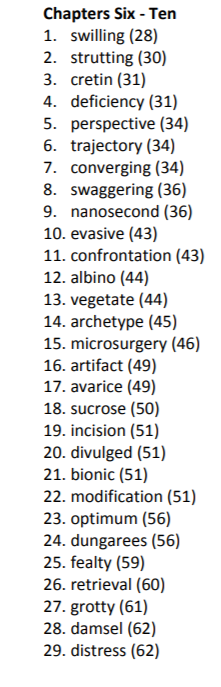
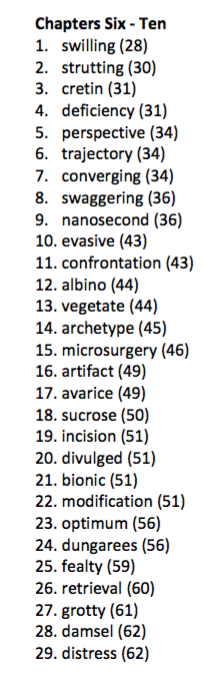
Students will complete the “Vocabulary Quiz: Chapter 6-10". Students will also continue brainstorming/prewriting for their essays.
Due:
Assignment
Due:
Assignment
Due:

Assignment
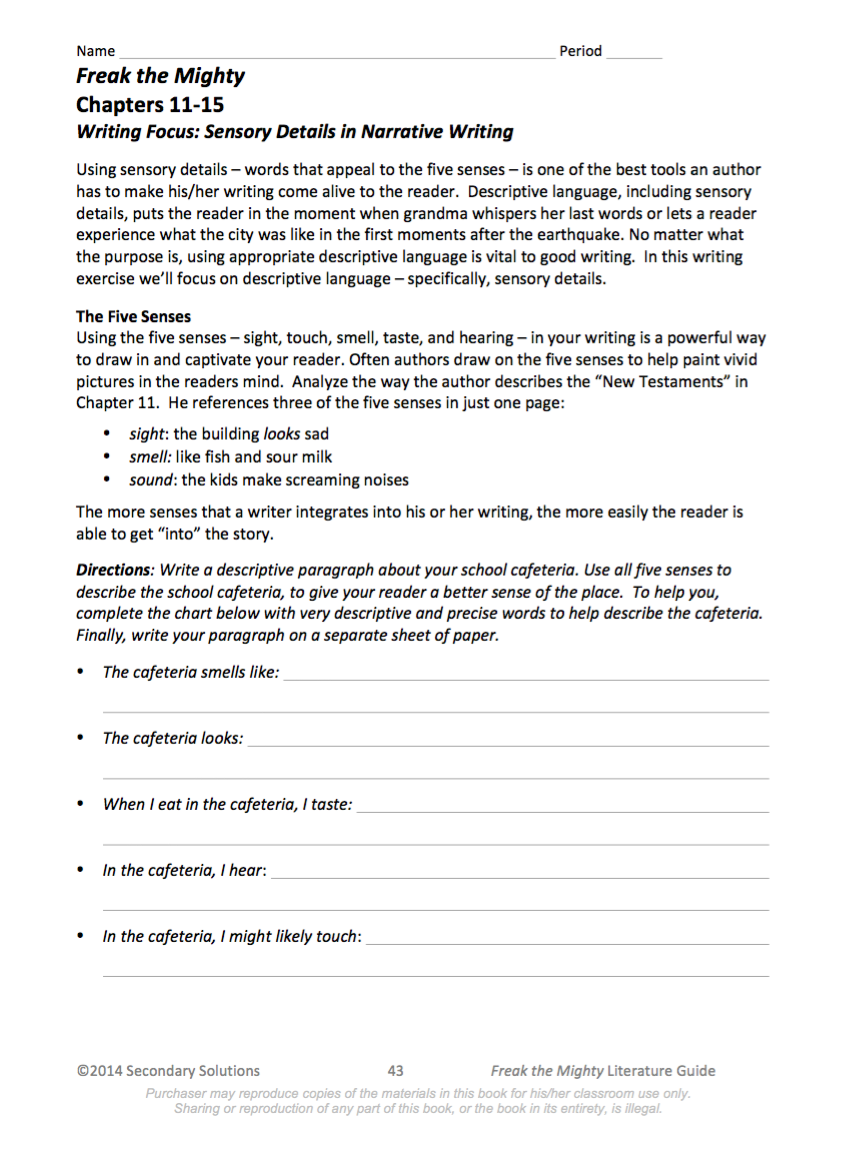
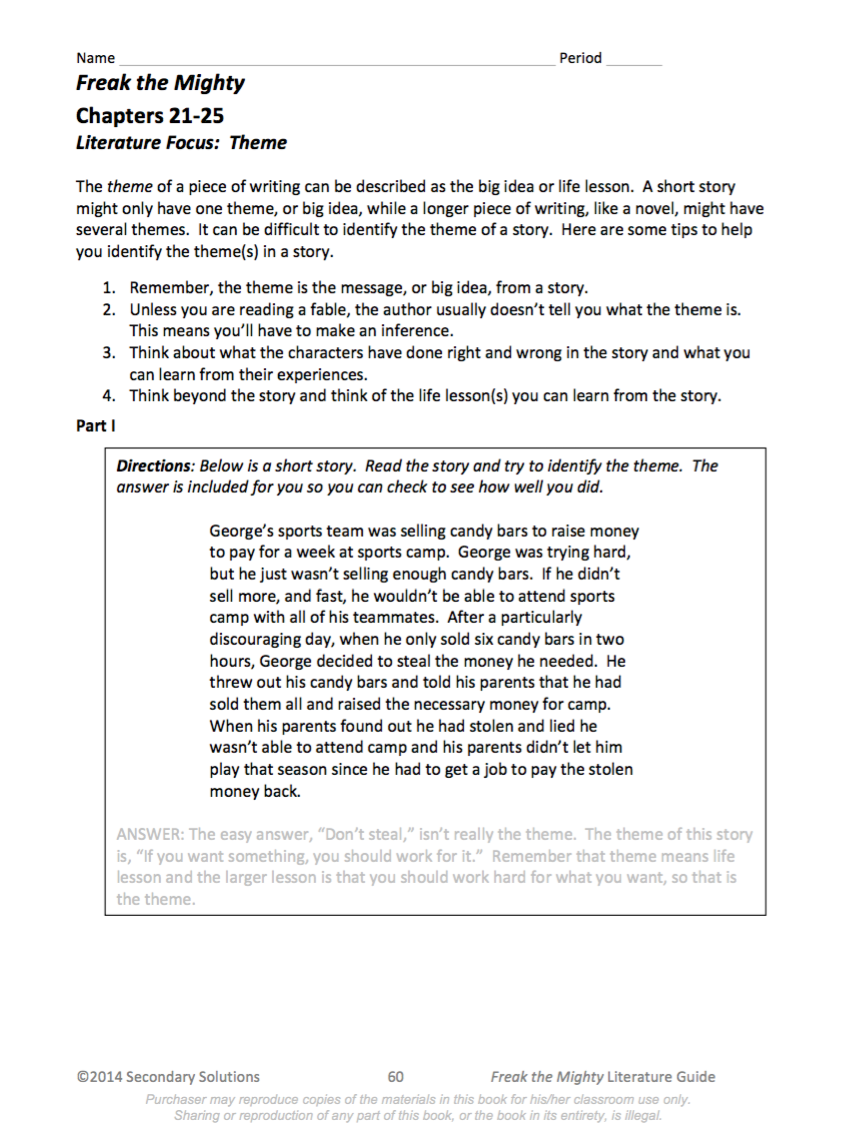
Students will turn in the “Freak the Mighty: Literature Focus” handout. This was assigned on Monday, September 17th.
Due:
Assignment
Due: